
Timeline 1983
Improvising with Thijs van Leer
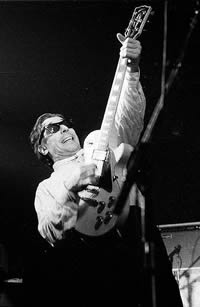
Dutch musician Thijs van Leer joins him on stage at Zaal Lux in Herenthout, Belgium on February 11 Van Leer was the opening act.
Performing on Swedish TV
He does a short interview and a solo performance of (I Keep A) Close Watch for the Swedish Casablance TV show. Broadcasted on February 14, 1983.

Live TV broadcast Rockpalast
A solo show at the Zeche in Bochum, Germany (March 6), is taped and broadcasted live for the long running Rockpalast series.
His then wife Risé Cale joins him on stage for the vocals on Risé, Sam And Rimsky-Korsakov.
The concert has been re-broadcasted many times - and was widely bootlegged - before finally getting an official release in 2010 as part of the Live At Rockpalast set (without the Risé part).
Cale's father dies
After a brief stay in hospital, Cale's father William Arthur George Cale dies on March 28. He was 79.
"I got a call on a Friday saying he had died and the funeral would be on the Sunday. I could not go because I was on tour. I felt guilty as hell, but I talked to my mother on the phone."
Rob de Nijs covers "I'm Not The Loving Kind"
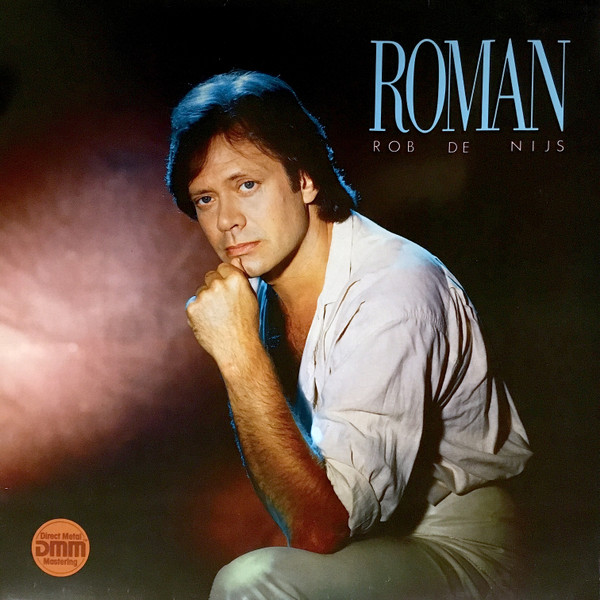
Dutch singer Rob de Nijs covers I'm Not The Loving Kind on his album Roman in a translation by his wife Belinda Meulendijk: Liefde is niet voor mij. The tracks end with a snippet of (I Keep A) Close Watch, also in Dutch. The record label lists is as "Not The Loving Kind Close Watch".
Producing Made For TV
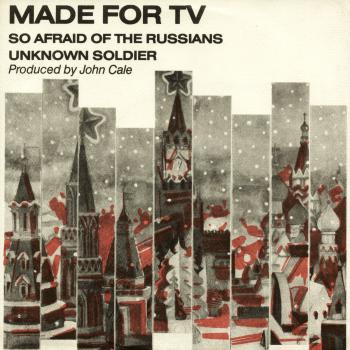
Produces the single So Afraid of the Russians b/w Unknown Soldier by English New Wave group Made For TV. Plays baritone guitar, synth percussion and transatlantic telephone. The tracks were recorded at Skyline Studios in New York.
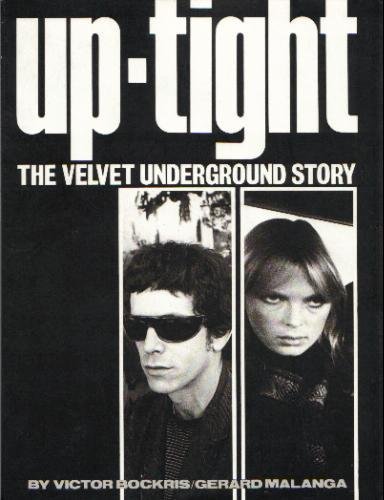
UP-TIGHT: The Velvet Underground Story
Victor Bockris and Gerard Malanga publish their essential book UP-TIGHT: The Velvet Underground Story. Updated in 1995, including a new section about the 1993 Velvets reunion.
On the recording of the White Light/White Heat album:
"Most of the recording was done straight through; Sister Ray was one piece. I Heard Her Call My Name and Here She Comes Now evolved in the studio. We never performed them live. The Gift was a story Lou had written a long time ago when he was at Syracuse University. It was my idea to do it as a spoken-word thing. We had this piece called 'Booker T' that was just an instrumental, so instead of wasting it, we decided to combine them."
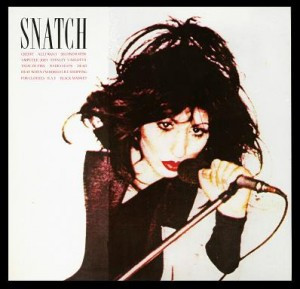
Cale produced tracks on Snatch compilation
The output of Snatch, an experimental punk rock duo formed by Judy Nylon and Patti Palladin, is released on a compilation album. The former sang backup on The Man Who Couldn't Afford To Orgy and the Even Cowgirls Get The Blues album. Two from the three Cale produced tracks, although he was not credited as such, from a 12" released in 1980, can be found this album: Shopping For Clothes and Joey.
Velvet Underground royalties
Cale's lawyer Christopher Whent starts to sort out the mess of the Velvet Underground's financial records.
"It took years for us to figure out what was going on with the Velvet Underground catalogue. At first, nobody knew where the hell anything was, nobody knew what catalogue numbers were. Then I met and took on as my lawyer an experienced and determined Englishman living in New York named Christopher Whent. Over a period of three to four years, during which he became the Velvet Underground's lawyer, he doggedly sorted the mess out. Once that was done, then we could sit down calmly and figure out what apportionment was to be arranged. If you sign a contract with Warner Brothers today, it's eighty pages long, whereas the agreement that we had with Polygram was based on three contracts from 1965, '66 and '67. We had three contracts, because the members of the Velvet Underground changed three times over the recording of as many albums for MGM Records. Since each of the contracts was also at a different royalty rate, and through the years MGM had compiled many versions of our 'greatest hits' from all the albums for sale around the world, Polygram had an almost impossible task to account to each member individually and accurately for the royalties due him or her. So Chris proposed that we form a partnership, to which Polygram would pay one cheque, leaving it up to us how it would be split up. We agreed among ourselves that each of us would participate in all the albums. In gratitude, Folygram increased our royalty rate somewhat above the original indentured servitude rate.quot;
It will take three years for the first royalty checks to arrive.
"By 1986, for the first time all four members of the band started to receive regular royalties, but the kind of money coming in was around $1,500 a year. The problem was we couldn't know what these figures represented, because Polygram's accounting system at the time was sloppy end irrational. And in order to establish the arrangement we now had to forgive their sloppiness up to this point. This was how Lou could claim that the banana album had sold a million copies; Polygram say it sold around 400,000 domestically."
Whent becomes the trustee for the band's trust in January 2015, handling the band's legacy and legal hassles on their behalf from then on.